

In direct-to-consumer healthcare, every touchpoint—from your storefront and messaging to your onboarding experience and beyond—shapes how patients experience your brand and whether they return over time. In other words, all these components work together to shape credibility and build lasting relationships with patients.
The sections below explore the key considerations for developing a telehealth brand and growth strategy that can scale alongside your business.
What to Consider When Building Your Telehealth Brand
Designing a Storefront That Builds Trust and Identity
Your storefront is where patients first experience your brand. A white-label telehealth platform allows you to customize the front-end experience while relying on pre-built clinical infrastructure behind the scenes.
When designing your storefront, prioritize things like:
- Clear positioning. Make it immediately obvious who you serve, what conditions you treat, and why patients should trust your approach.
- Educational content. Help patients understand treatments, eligibility, and what to expect before they commit.
- Simple patient journeys. Reduce friction with intuitive navigation, streamlined intake, and clear next steps.
- Consistent branding. Keep your visual identity, tone of voice, and messaging cohesive across every patient touchpoint.
- Trust signals. Highlight clinician expertise, evidence-based care, transparent pricing, patient reviews (when appropriate), and privacy protections.
Telehealth storefronts often include:
- Branded landing pages
- Product pages
- Patient onboarding
- Checkout flows
- Treatment education
- FAQs
Building an Acquisition Strategy That Can Scale
Once your brand is established, the next challenge is helping the right patients discover it.
Most telehealth businesses rely on a mix of acquisition channels, including:
- Search engine optimization (SEO)
- Answer engine optimization (AEO)
- Paid media
- Partnerships
- Referral programs
- Affiliate marketing
- Content marketing
- Community management
Each channel plays a different role in the patient journey, and the right mix depends on your audience, budget, and growth goals.
And as acquisition costs rise, relying too heavily on a single channel can become expensive. Diversifying your marketing strategy while measuring channel performance helps create more sustainable long-term growth.
Designing for Retention From Day One
Growth doesn't stop after the first conversion. Long-term success depends on creating experiences that keep patients engaged throughout treatment.
Lifecycle marketing and customer relationship management (CRM) systems help operators manage:
- Onboarding communications
- Refill reminders
- Treatment updates
- Educational content
- Churn prevention
- Win-back campaigns
Thoughtful communication, personalized follow-up, and ongoing education can improve adherence, increase lifetime value (LTV), and strengthen long-term patient relationships.
Measuring and Optimizing Growth
As telehealth businesses grow, understanding what's driving performance becomes just as important as attracting new patients.
Strong analytics help operators monitor patient acquisition, conversion, retention, adherence, and revenue while identifying opportunities to improve both operational efficiency and the patient experience.
As organizations scale, AI-powered insights can help surface trends, identify anomalies, and support faster decision-making. At the same time, automation should enhance (not replace) the human experience. The strongest telehealth brands combine data-driven optimization with thoughtful, patient-centered care.
How CareValidate Supports Brand Growth and Operational Intelligence
Building a telehealth business doesn’t stop at clinical infrastructure. Once your offering is live, growth depends on how well you acquire, convert, retain, and learn from your patients over time.
CareValidate gives operators the infrastructure to launch under their own brand, automate patient lifecycle workflows, and make smarter decisions through real-time operational intelligence.
White-Label Infrastructure
CareValidate is a white-label platform, meaning your patients never see us—they see your brand.
From the storefront they land on to the intake form they complete to the confirmation emails they receive, every patient-facing touchpoint is designed to look, feel, and sound like your business.
This includes:
- Custom domains and SSL
- Branded storefronts and landing pages
- Personalized onboarding flows
- Customizable checkout experiences
- Built-in optimization tools to test headlines, pricing, CTAs, and intake flows
This allows operators to build trust and improve conversion without building infrastructure from scratch.
Growth and Lifecycle Automation
CareValidate helps operators manage the full patient lifecycle, from acquisition to retention. The platform supports:
- Automated eligibility checks
- Appointment scheduling
- Medication fulfillment
- Refill reminders
- Follow-up outreach
- Email and SMS lifecycle automation
- Referral tracking and affiliate tools
Patient data can also flow directly into your CRM or marketing automation platform via API or webhook, allowing teams to segment, target, and re-engage patients with full context.
Real-Time Analytics and Revenue Visibility
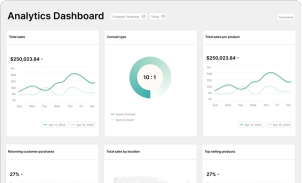
CareValidate gives operators complete visibility into patient acquisition, revenue performance, clinical outcomes, and retention trends through real-time dashboards and built-in AI insights.
Teams can track:
- Patient acquisition cost (PAC) and lifetime value (LTV)
- Conversion rates
- Prescription fill and refill adherence
- Provider productivity
- Revenue by product, geography, and referral source
- Patient outcomes and engagement trends
CareValidate’s built-in AI assistant, Carrie, surfaces insights, flags anomalies, and recommends actions based on live program data, helping operators make faster, smarter decisions.
The CareValidate Growth Program
For teams that want or need more than software, CareValidate also offers strategic growth support through flexible agency and consulting models.
Operators can tap CareValidate’s team of expert growth advisors to partner on:
- Brand and messaging strategy
- Go-to-market planning
- CRM and lifecycle optimization
- Affiliate marketing
- Paid media
- Organic growth
- Landing page optimization
This gives healthcare organizations access to experienced growth support without building an in-house team from day one.